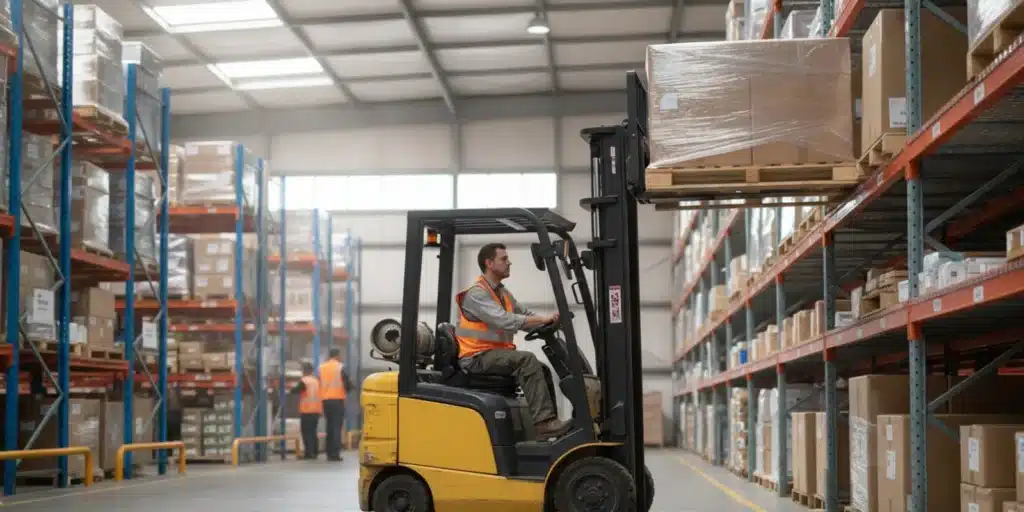
If you are looking for forklift jobs Houston employers have available, apply when you find an active opening that fits your experience, schedule, and ability to reach the worksite. There is no single hiring month that works for every employer. A complete, timely application is more useful than waiting for a season based on rumor or assuming every warehouse follows the same calendar.
Call TPI Staffing about current openings
Start looking as soon as you are ready
Begin your search when you know what kind of work you can accept and when you could start. Warehouses and distribution operations may recruit when workloads, staffing, or schedules change. Needs vary by employer and by opening, so a general calendar cannot tell you whether a particular Houston-area role is available today. Check current listings and act when you see a suitable one.
If you are employed, you can look before your last day. Be ready to state your notice period and earliest start date accurately. If you need work soon, check listings regularly and apply to openings whose stated requirements you can meet. A posting may close or change as an employer’s needs change. Do not assume an older listing is still open without confirming it.
It helps to separate searching from applying. Searching early gives you time to compare shift, location, duties, and qualifications without rushing. Applying while a suitable opening is active lets the employer or recruiter see your interest and availability in time to consider you. You can prepare your information before an opening appears, then tailor your application to the particular job rather than sending the same vague description everywhere.
For example, imagine you want a weekday day shift and can start in two weeks. You do not have to wait until the two weeks are over to apply. State the date you could begin, then ask whether the employer’s schedule can accommodate it. If a listing says the role starts immediately, you can still ask whether that means a specific start date or simply that the employer is reviewing candidates now. The answer may help you decide whether applying is worthwhile.
What can change the timing of a forklift opening?
An employer may recruit forklift operators to support shipments, production, a busy period, or a workforce change. Those are common reasons a warehouse may hire, not a promise that a particular Houston employer is hiring now. A job listing is the best starting point for current details; a recruiter or employer can clarify whether the position remains open.
The posting date is one clue, but it is not a reliable deadline on its own. An older listing may still be active, while a recent one may already have enough applicants or may have changed. If an application link still works, submit complete information and ask a clear question about availability when needed. Avoid spending days trying to infer a hiring calendar from the date alone.
Timing also depends on your own readiness. A rushed application with incorrect dates, a disconnected phone number, or unclear work history can make it harder for someone to assess your fit. Spending a short time organizing those details before you apply can help you move quickly without misrepresenting your experience.
Confirm the practical details before you apply
Read beyond the job title. Two forklift listings can involve different equipment, tasks, shifts, and work environments. Before applying, note the details that determine whether you can perform the work and show up reliably.
- Shift and workdays: Check whether the schedule is days, evenings, overnight, rotating, or another arrangement. Note any listed weekends or overtime. Do not assume overtime is available, optional, or required unless the employer says so.
- Worksite: Identify the actual area or address when provided. In a large metro area, a location described only as Houston may not tell you whether the commute works for your shift.
- Equipment: Look for the type of equipment named and whether the role also involves other warehouse equipment. Do not claim experience with a machine you have not operated.
- Daily duties: The work may include staging orders, moving pallets, loading or unloading, replenishing stock, or other tasks. Review what the posting actually says rather than relying on the word “forklift.”
- Experience and qualifications: Separate preferred experience from requirements. If a specific qualification, training, or authorization is stated, ask what it means for this job.
- Start date and arrangement: Find out whether the opening is temporary, temp-to-hire, or direct hire, and ask what that arrangement means for the particular role.
Make a quick note of anything missing. If the schedule is not clear, ask whether it is fixed or rotating. If the equipment is not identified, ask what type is used and whether job-specific instruction is provided. If the location is broad, confirm where you would report before making travel plans. These questions help you decide whether the opening fits; they do not guarantee an interview or placement.
Prepare the information a recruiter or employer needs
Gather your recent work history, current contact information, and a clear account of the work you performed in warehouse or industrial roles. You do not need a perfect résumé to explain your background. You do need accurate details that let someone understand what you have done and what you are looking for.
- Write down your work history. List employers or industries, approximate dates, job titles, and the responsibilities you handled. If dates are approximate, be honest about that. Prepare a short explanation of any work gap without overstating your experience.
- Describe equipment specifically. Name the equipment you have actually used and the setting in which you used it. If you remember the tasks more clearly than the equipment model, describe the task plainly. Be direct if you have used a different kind of equipment or have no operating experience.
- Separate operating from related experience. Picking orders, loading, receiving, inventory, and working near powered equipment may be relevant background, but they are not the same as operating a forklift. Explain both accurately so the hiring contact can assess the distinction.
- Set out your availability. Know which days and shifts you can work, when you could start, and any limits that affect attendance. If your availability will change on a known date, say so rather than promising a schedule you cannot keep.
- Check your contact details. Use a phone number and email account you can access. Review spelling and voicemail settings, and monitor messages after you apply, including junk or spam folders.
- Keep the posting in front of you. Save the job title, listing link, location, and application date. That way you can answer follow-up questions about the correct opening instead of trying to remember which warehouse or shift you contacted.
Accuracy matters more than making every job sound identical to forklift work. For instance, a candidate who received pallets, counted stock, and used a pallet jack can describe those duties as warehouse experience while clearly stating that forklift operation is new to them. Someone with forklift experience should specify the setting and tasks they know, then ask whether the employer needs experience on a particular equipment type.
Apply when the opening is a reasonable fit
You can apply before every detail is settled if you understand the main duties and believe you meet the stated requirements. You should not wait for answers to minor questions that do not change your ability to do the job. But clarify important points before you accept an offer or make a major commitment, especially schedule, worksite, job arrangement, and any required qualification.
Suppose a listing describes warehouse work and asks for prior forklift experience, but does not name the equipment. If you have operated forklifts in a warehouse, submit an accurate application and ask what equipment is used. If you have never operated one, do not suggest otherwise. Ask whether related warehouse experience is considered and whether instruction is available. The employer’s stated requirements should guide your decision.
Another example: a role looks suitable, but the schedule says “flexible.” That word can mean different things. Ask whether the employer expects you to work different shifts, whether a regular schedule is available, and how far ahead it is set. If your transportation or other responsibilities limit your hours, resolve the uncertainty before treating the job as a practical fit.
TPI Staffing’s job search lets candidates review current openings. The company recruits for industrial work, including warehousing and forklift-related roles, as well as office and professional positions. Openings vary, and applying does not guarantee selection. Review current job listings and use the instructions attached to the specific opening.
Compare opportunities by the terms, not just the title
If you have more than one possible opening, compare the terms in a simple list. The job with the most familiar title may not be the one that fits your availability or experience. Use the same questions for each listing so you are comparing like with like.
- Schedule: Record shift hours, workdays, and any stated weekend or overtime expectations. Mark unanswered items for follow-up.
- Location and commute: Write the worksite area and estimate whether you can reliably arrive at the shift’s start time. Consider the return trip too, particularly for an overnight schedule.
- Equipment and tasks: Match the stated duties to work you have actually performed. Note where you would need clarification or additional instruction.
- Experience requirements: Identify requirements you meet, those you may meet in a different way, and those you do not meet. Ask about the middle category rather than assuming.
- Employment arrangement: Ask whether the role is temporary, temp-to-hire, or direct hire, and what the arrangement means in the job you are considering.
- Application status: Track when you applied and whether you received confirmation or a request for more information.
Consider two hypothetical openings. The first is a day shift with a longer commute and duties that closely match your forklift experience. The second is closer, but the shift rotates and the equipment is unfamiliar. Neither is automatically better: your decision depends on whether the commute, shift, and job requirements work for you. Confirm unanswered details instead of filling gaps with assumptions.
A staffing assignment’s terms depend on the specific opening and employer. TPI Staffing recruits for temporary, temp-to-hire, and direct-hire roles in Texas. Those arrangements are not interchangeable, and one opening’s terms do not establish another’s. Ask what applies to the job you are considering. TPI’s explanation of temporary staffing describes one employer hiring model; it is context, not a substitute for confirming the terms of a particular assignment.
Understand safety and qualification questions
Forklift work takes place in active workplaces. Employers set site procedures for operating equipment, moving materials, and working around pedestrians. Before starting, listen to the instructions for that worksite and ask how the site handles equipment authorization, pedestrian routes, load limits, and reporting a problem. Do not operate equipment until you are authorized and understand the applicable procedures.
The Occupational Safety and Health Administration provides general workplace safety information at OSHA.gov. An employer can explain the procedures and qualification process for its particular site. A posting may ask about prior training or experience, but that does not mean every employer uses identical requirements or that a particular qualification automatically applies to every workplace.
When describing your background, distinguish training you completed from equipment you have operated on the job. Be prepared to say when and where you received training, if asked. Do not claim to hold a license, certificate, or authorization unless you actually hold it and it matches what the employer is asking about. If you are unsure what a term in the listing means, ask before representing your qualifications.
Apply and follow up with a clear record
Use the application route shown for the opening, and follow any directions on the candidate page. Before submitting, review the form for incomplete fields, incorrect dates, and errors in your contact details. If the form asks about experience, keep the answer specific: name the tasks and equipment you know rather than relying on a broad statement such as “I can do anything.”
After applying, keep a record of the role and date. Monitor your phone and email and respond when you can. If you receive a message asking for an interview or additional details, confirm which opening it concerns and make a note of any next steps. If the listing or confirmation gives a follow-up timeframe, use that guidance.
If no timeframe is given and you have not heard back, one brief, courteous follow-up can confirm your interest and ask whether the opening remains active. Include the job title and the date you applied. For example: “Hello, I applied for the forklift operator opening on Tuesday. I am still interested and available for the listed shift. Is the opening active, and is there any information you need from me?” Avoid sending repeated messages in a short period.
Use a verified application channel, and pause if an unexpected request for sensitive personal or financial information seems unusual. Check the contact details against the employer’s or staffing agency’s official site and ask questions before sharing information you do not understand.
If you do not see a suitable opening today
Keep checking current listings and revisit your search when your availability or experience changes. You can also consider related warehouse or industrial work if it fits your background, while avoiding applications to roles whose essential requirements you cannot meet. Related work may help you build familiarity with warehouse routines, but it does not replace a requirement the employer has stated.
Think flexibly about the parts of the job that matter most. Could a different shift work? Would a nearby Houston-area location be reachable? Are you interested in receiving, shipping, assembly, inventory, or distribution duties as well as forklift operation? These questions can widen the set of roles you consider without asking you to claim skills you do not have.
If you are open to more than one type of work, make a short list of acceptable schedules, commute limits, and duties. For example, you might be able to consider either a day or evening shift but not an overnight schedule, or you may accept a longer commute only for a fixed shift. A clear list helps you respond quickly when a relevant opening appears and prevents a broad search from becoming an application to every job title.
Keep your work history and contact details current, and check the instructions for each opening. If you have applied before, update your availability rather than assuming an earlier application communicates your current situation. Openings change, and a new application may be needed for a specific vacancy.
How TPI Staffing fits into a Houston-area search
TPI Staffing is a Houston-founded staffing and recruiting company serving employers and job seekers in Texas. The company’s published history says Cheryl Campbell founded it in 1988, and ownership and operations passed to her daughters Lauren Whitney and Lindsey Campbell in 2023. TPI recruits for light industrial roles as well as office and professional positions, including forklift-related work when openings are available.
Basic recruiting is free to candidates. A process may include a recruiter conversation and screening steps relevant to a role; exact steps vary. Read the listing, provide truthful information, and ask what happens next. An application is a way to be considered, not a promise of an interview, assignment, or hire. To start with live openings, use the job search and follow the application instructions for the role that interests you.
Frequently asked questions
Is there a best month to apply for forklift jobs in Houston?
There is no single best month for every employer. Hiring depends on current staffing and workload needs, which vary. Check active listings and apply when you find a suitable opening rather than waiting for a month that may not matter to that employer.
Can I apply if I have warehouse experience but little forklift experience?
You can apply if you meet the opening’s stated requirements, but be clear about what equipment you have and have not operated. Explain relevant warehouse duties and ask whether related experience is considered or whether instruction is available. Do not imply that warehouse experience is the same as forklift operating experience.
Should I wait until I can start immediately?
No. You can apply before your available start date if the role otherwise fits. State the date you can begin and ask whether it works for the employer. Do not promise an earlier start if you cannot meet it.
How soon should I follow up after applying?
Follow the timeframe in the listing or application confirmation. If none is provided, allow a reasonable interval and send one concise message asking whether the opening remains active. Include the job title and application date so the recipient can identify your application.
Does applying through a staffing agency guarantee a job?
No. Applying allows you to be considered, but it does not guarantee an interview, assignment, or hire. Selection depends on the specific opening and employer’s needs.
Start with openings available now, prepare accurate details about your experience, and apply when the schedule, duties, and location make sense for you. Keep a note of your application date.